5 Commercial Real Estate Digital Transformation Trends You Can't Ignore in 2026

The digital transformation in commercial real estate didn’t arrive with a bang. It appeared gradually in the form of virtual tours and digital tools that quietly replaced paper files.
In 2026, though, it is shaping up to be the turning point – where digital-first operations outperform old-school intuition.
Big data and AI-based technologies are now a big part of the game, and are outshining time-consuming workflows and outdated real estate business models.
This shift reaches far beyond proptech startups or flashy real estate technology. Digitalization is changing how properties function during their lifecycle, including:
- Smart maintenance
- Faster underwriting
- Clearer metrics around price, retention, and operational efficiency.
Buildings that optimize energy and streamline processes are starting to see stronger property values, and lenders are noticing.
Below are five real estate digital transformation trends showing how companies, investors, and professionals will need to operate in 2026, and why informed decisions now matter just as much as location.
We’ll cover the following:
- What are emerging technologies in real estate?
- The 5 trends driving the digital transformation in commercial real estate in 2026
- Is real estate going digital? How to make your next deal move faster
Want to see how the digital transformation can help land your next deal? Contact Duckfund to find out how our fast, flexible financing can secure your property in 48 hours.
What are emerging technologies in real estate?
Most of the “emerging” technologies in the real estate sector have already arrived and matured. Tools that once sounded experimental, like cloud-based property management and Internet of Things (IoT) sensors, now sit inside normal operations at many real estate firms
Instead of pilots or real estate marketing gimmicks, these digital technologies are delivering data-driven decisions that help deliver outcomes like:
- Faster underwriting
- Smarter maintenance
- Real-time notifications
- Crystal-clear insights into commercial property market trends and values.
Proptech startups helped prove the concept; now established real estate companies are integrating the same tools to streamline processes and cut time-consuming manual work.
The biggest shift isn’t the technology itself, but that owners and investors expect measurable results. They’re looking for a better user experience for tenants and lower operating costs.
They also want to peer into that crystal ball that advanced tech now provides, and see what they can expect a few years down the line.
In that sense, the real estate digital transformation is now more about making the industry run much more efficiently than sparkling new inventions.
The 5 trends driving the digital transformation in commercial real estate in 2026
So, with 2026 upon us, how is the commercial real estate digital transformation set to affect you, a CRE investor or developer?
Here are five technology trends in real estate to watch out for.
Trend 1 – AI moves from experimental phase to a key part of underwriting, leasing, and building ops
The digital transformation in commercial real estate is no longer theoretical.
Artificial intelligence has moved past just chatbots and ticket automation and now supports important CRE decision-making, including underwriting and revenue forecasting.
We’re already seeing these advancements influencing valuations in 2026 because properties with strong digital infrastructure carry lower operating risk and clearer performance metrics.
AI-powered digital solutions in real estate are becoming an operational requirement, yet many firms are still figuring out how to integrate them into day-to-day workflows.
Data automation becomes a real value driver
A major reason for AI’s rise is data automation. Owners are using AI-powered tools to extract information from leases, rent rolls, environmental reports, zoning documents, and historical operating expenses. That used to take days of manual review; now it takes minutes.
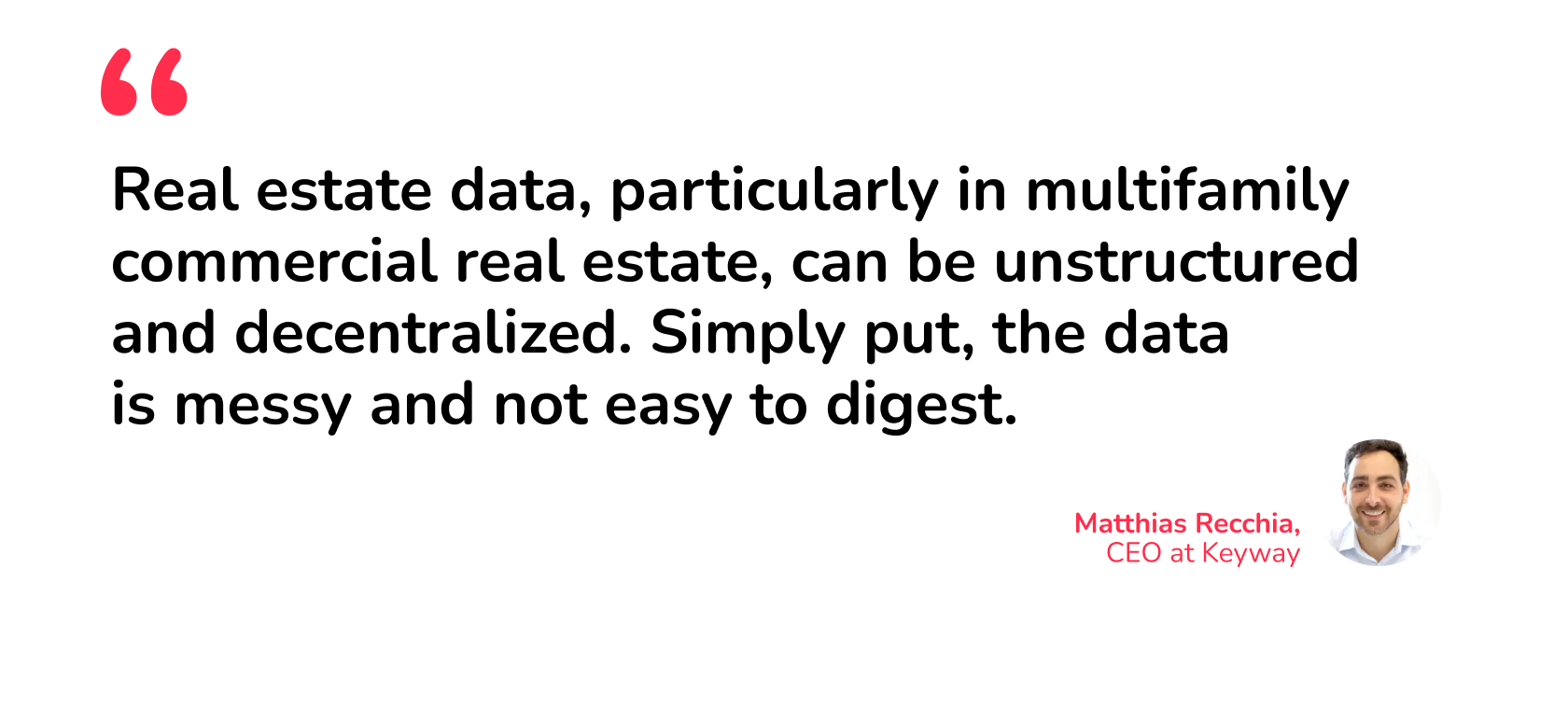
“Real estate data, particularly in multifamily commercial real estate, can be unstructured and decentralized. Simply put, the data is messy and not easy to digest,” says Matias Recchia, CEO of Keyway, an AI-powered investment manager. “AI can play an essential role in organizing data so it can be analyzed more easily.”
This AI-powered process standardizes documents and flags inconsistencies so that appraisal teams get much cleaner inputs.
Leasing and operations are getting the same treatment
Leasing teams, too, are tapping into AI-driven demand scoring. Generic marketing campaigns are out the window – instead, marketers can now target suitors with the highest probability to tour and sign.
On the operations side, predictive tools are forecasting equipment failures and generating maintenance requests before breakdowns happen. Facilities with automated work orders are reporting fewer service disruptions and tighter control of energy use, especially where IoT sensors are in place.
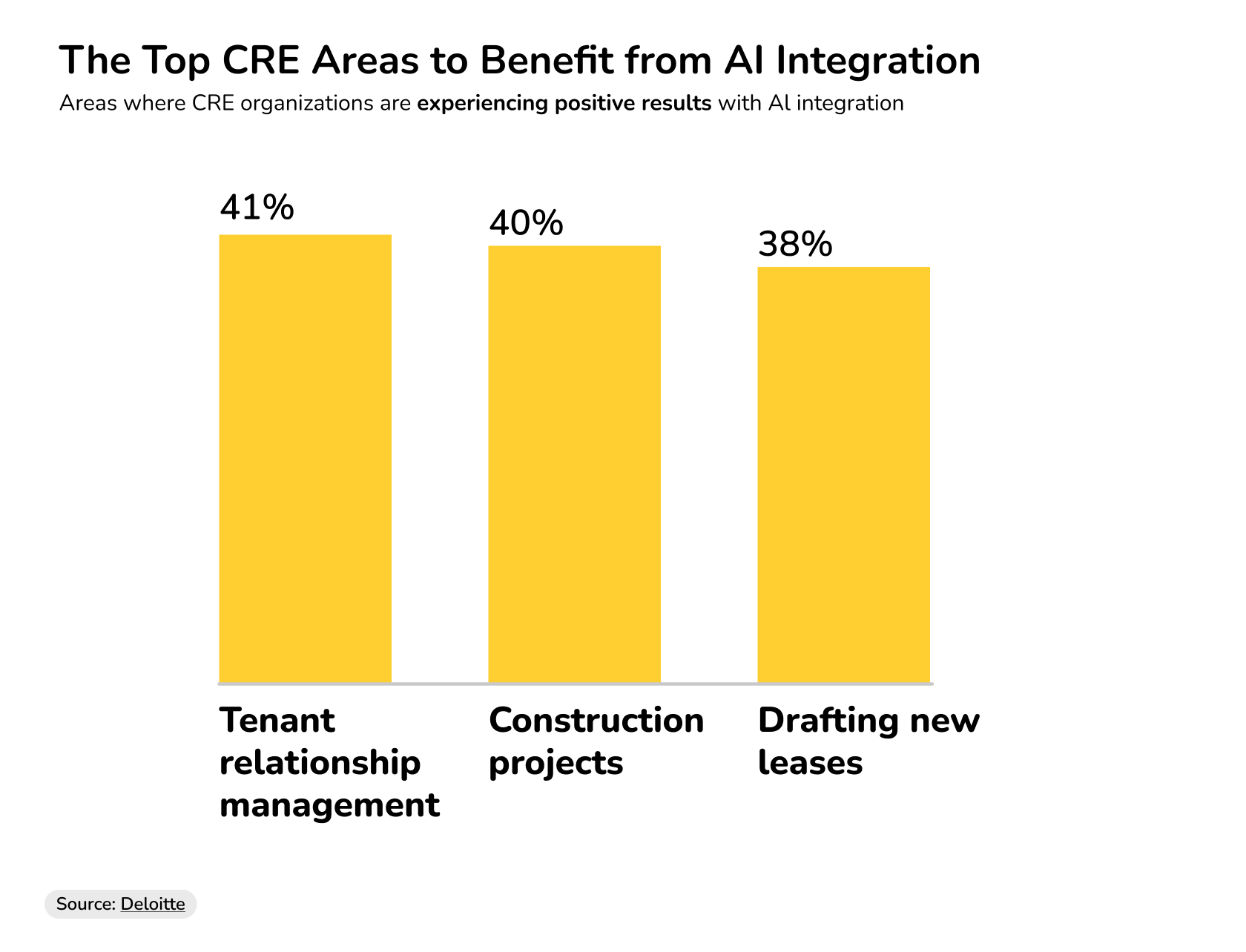
A recent Deloitte report also found that firms are getting the biggest near-term gains in tenant relationship management (41%), lease drafting, and construction projects.
Source: Deloitte
The industry has moved from questioning AI’s value to figuring out where execution pays off fastest.
What’s holding AI back? Bad data
The only real constraint here is data quality. AI cannot fix bad inputs, and many investors are waking up to that reality.
That’s why 2026 is shaping up to be a year of cleanup, including:
- Common rent roll formats
- Clear property-level KPIs
- Cybersecurity protocols
- Tighter integrations between CRM systems and property management software.
With that groundwork in place, lenders get a transparent picture of income, occupancy, and operating risk, and funding moves faster.
In other words, the market advantage no longer belongs to whoever has the most data, but whoever has the cleanest data.
Trend 2 – Smart-building retrofits turn from “innovation” into a cost-reduction strategy
A few years ago, smart buildings were talked about as a sustainability play. In 2026, they’re being treated as an operating-expense play.
Industrial parks, office campuses, and logistics centers are now installing retrofit-ready IoT sensors as part of standard budgeting, not experimental pilots. The reason is straightforward: older buildings are expensive to run, and energy usage is now a line item that owners can control with data instead of guesswork.
With 68% of CRE leaders expecting higher operating expenses over the next 12–18 months, according to Deloitte, retrofits are becoming a financial decision rather than a tech statement.
Efficiency is overtaking novelty
Temperature, lighting, air quality, badge access, water flow, and equipment performance can all be monitored in real time. Automated adjustments cut unnecessary usage without relying on manual oversight. The result is a quieter but more measurable shift, including lower utility bills and fewer emergency service calls.
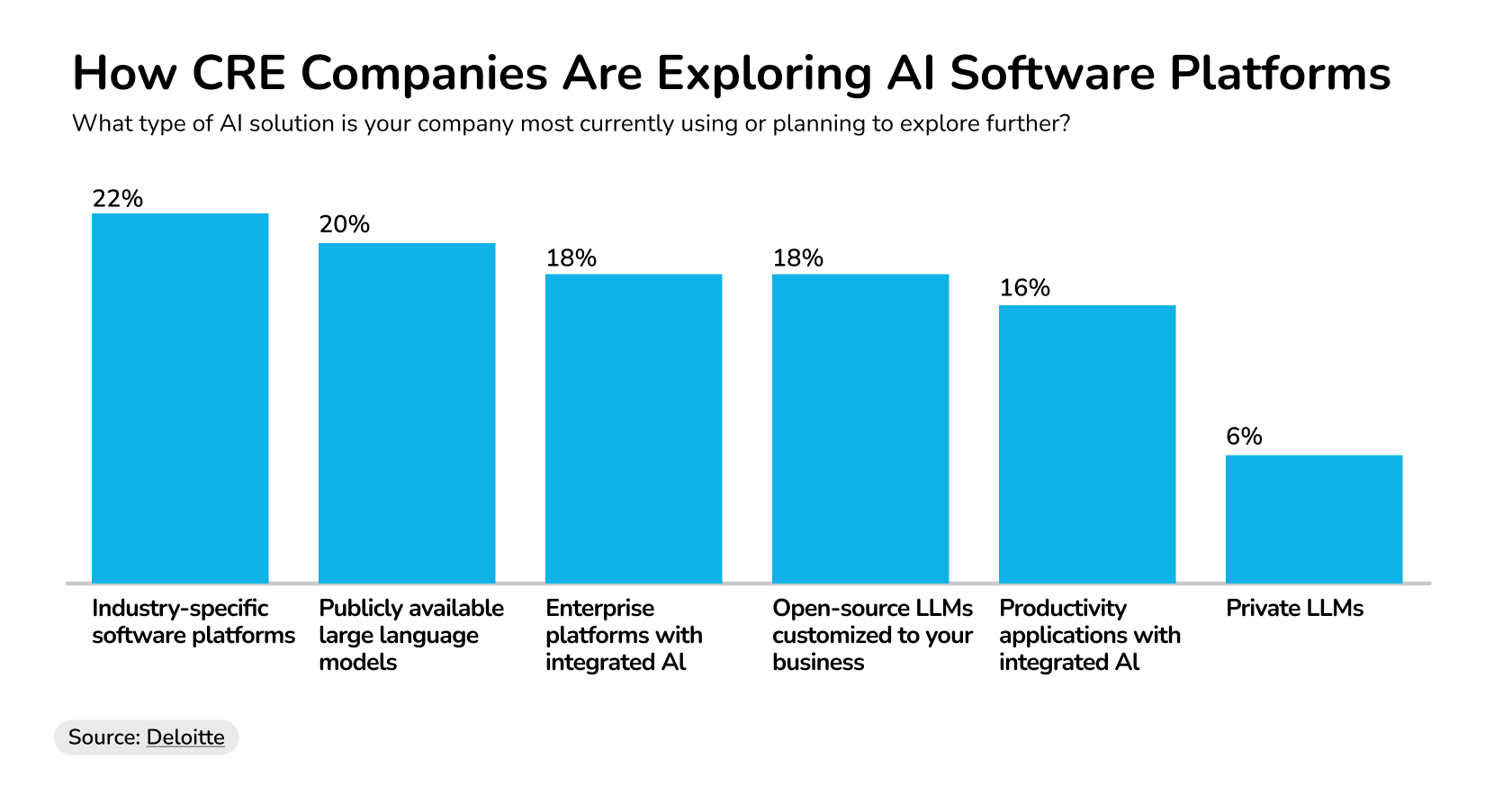
This aligns with Deloitte’s observation that owners are prioritizing industry-specific platforms (not generic productivity apps) as the first wave of AI-enabled tools. It’s a signal that budgets are moving toward operational tech that translates directly into NOI stability.
Source: Deloitte
This matters because CRE is still contending with issues like vacant office space and rising maintenance costs, not to mention pressure to meet ESG targets. Investors don’t care if a property is “smart”; they want to know if it runs cheaper than a comparable asset without sensor-driven controls.
Smart buildings change valuation math
As more markets adopt sustainability benchmarking, retrofit projects are showing up in underwriting packages. When owners can quantify reduced energy and maintenance spend and lower risk of equipment failure, projected NOI improves – and so does lender confidence.
What’s holding this back? Legacy systems. Many buildings still run on outdated equipment, like fragmented access controls and stand-alone HVAC systems. Owners who consolidate those systems into a single digital dashboard are the ones seeing real economic impact.
In short, smart-building technology is moving from ESG branding into hard financial performance. For properties built before 2010, retrofits are becoming a practical route to protect NOI and stabilize valuations.
Trend 3 – Predictive analytics becomes the new underwriting partner
Predictive analytics has existed in CRE conversations for years, but until recently, most teams relied on historical averages and broker opinions.
Now, machine learning platforms are analyzing reams of data, including:
- Leasing records
- Tenant churn
- Positioning strategies
- City-level permit activity,
- Transportation data
- Consumer movement patterns
- Third-party demographic data.
The result? Forecasts are grounded in current market behavior, not outdated comps or broker intuition.
Forecasting is getting sharper
Instead of asking, “What did this market do last year?”, investors can now see where demand is forming before vacancy rates appear in a quarterly report.
Predictive platforms are flagging neighborhoods with growing foot traffic, rising logistics demand, or upcoming zoning approvals. Investors can then compare potential acquisitions based on future revenue probability instead of just past performance.
This also changes how comps work. Now these platforms can ingest all kinds of records (think leasing activity and economic indicators) instead of human teams manually hunting for comparable sales and rent data.
Underwriting packages that once required weeks of manual verification are now assembled with automated data pulls and error flags.
Why all this matters in 2026
Cap rates remain very tight in strong submarkets. A small edge in forecasting can separate a profitable acquisition from a stalled asset.
Predictive analytics doesn’t remove all risk, but it shrinks the blind spots. Lenders and joint partners gain more confidence when underwriting is backed by transparent and repeatable data, not gut instinct.
Consistency is still an issue. Some portfolios are still feeding platforms with irregular or incomplete information. Data analytics tools work best when every property speaks the same language. Without that, models only see fragments of reality.
For investors competing against institutional players, predictive analytics are now needed to keep pace, rather than just trying out a new technology
Trend 4 – Data centers, power-first assets, and a selective office comeback
We’ve already talked about AI as a tool shaping underwriting and other operations, but there’s another side to the story: AI is driving its own category of real estate demand.
Training models, serving traffic, and processing real-time data require massive computing power, and traditional office or industrial buildings can’t support that load.
That’s why investors should keep an eye out for data centers and energy-ready industrial sites, plus power-first retrofits, heading into 2026.
Data centers are absorbing capital that would have gone to conventional CRE
Institutional investors are moving aggressively toward data infrastructure because demand isn’t slowing. More AI usage means more cloud computing, and more cloud computing means more rack space, power, fiber, and cooling capacity. This means data centers are being treated less like a niche tech asset and more like core CRE.
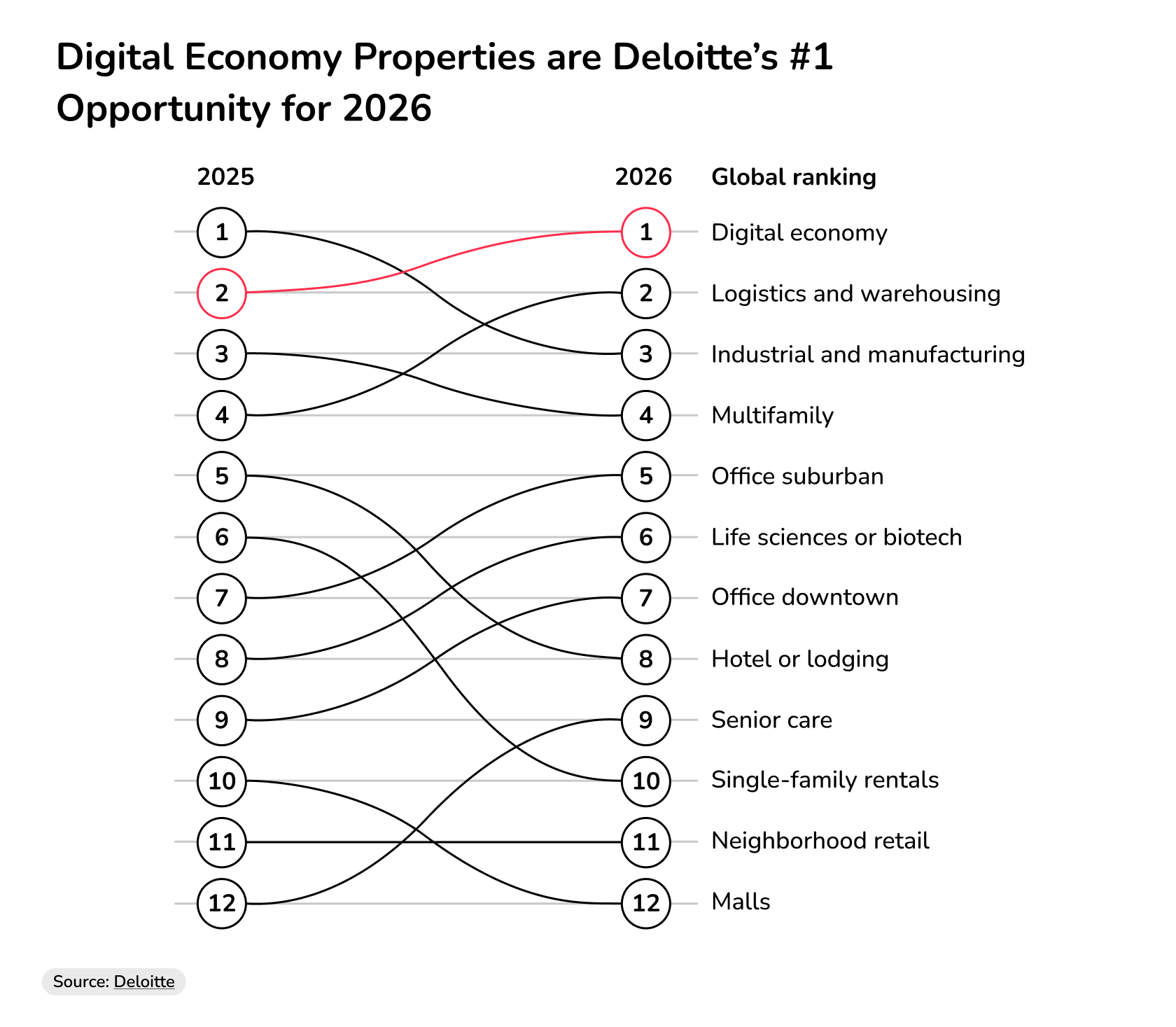
Deloitte ranks digital-economy properties (data centers, towers) as the #1 opportunity for 2026, confirming this rotation toward power-rich assets.
Source: Deloitte
Digital economy vacancies are unusually low, long-term leases are common, and tenants, including hyperscalers, enterprise companies, and AI platforms, carry strong credit.
For developers who once focused on office towers or logistics centers, land parcels that can support high power capacity and fiber access are suddenly more valuable than prime retail corners.
Power-first real estate becomes its own category
Data-heavy tenants are choosing locations based on access to renewable energy and cooling systems – not just square footage. That shift is quietly changing land acquisition strategy.
Properties near substations or solar fields are attracting premiums because they can host high-density computing or energy-intensive industrial tenants.
This also creates a secondary market: owners of older industrial stock are upgrading electrical and cooling systems to reposition buildings for data tenants or AI-adjacent uses. A decade ago, “power-first” sounded like a tech buzzword. Today, it’s a valid underwriting line item.
A selective office comeback
While generic office space continues to struggle, a small portion of the market is finding new life as digital-infrastructure conversions.
Some properties are being re-engineered as micro-data hubs, disaster-recovery sites, call centers, or AI-enabled back-office operations. Locations with strong fiber access and zoning flexibility are seeing tenant interest that wouldn’t have existed just a few years ago.
Supply, however, could be a problem. Not every property can handle high-density computing or utility requirements, and municipalities still vary in how quickly they approve infrastructure upgrades.
Yet capital is clearly rotating. The digital transformation in commercial real estate is reshaping which assets investors chase in the first place.
AI is changing where money flows, how developers evaluate land, and even which struggling properties get a second life.
Trend 5 – Digital dealmaking is accelerating closings, funding, and due diligence
Two years ago, blockchain and smart contracts were presented as a glimpse of the future. In 2026, they’re set to be part of live transactions, especially on the debt side, as lenders and investors chase speed, transparency, and lower execution risk.
Buyers no longer have to wait for someone to manually assemble files or send PDFs back and forth – instead, they can verify ownership records and validate payment obligations themselves. The goal is fewer delays and fewer surprises.
Debt markets are reopening, and speed now wins deals
The broader lending environment finally has momentum behind it. According to CBRE, the CRE Lending Momentum Index jumped 112% year-over-year, reaching its highest level since 2018. Alternative CRE financing options now make up the largest share of non-agency originations (37%), and CMBS activity has tripled from last year’s lows.
“Capital is flowing back, but it’s flowing toward borrowers who can verify documentation instantly and close without paper-driven slowdowns,” say the Deloitte team.
Source: CBRE
Smart contracts eliminate bottlenecks
Instead of trading PDFs, emails, and couriered signatures, smart contracts store deal terms and digital records in shared ledgers. Every stakeholder sees the same file set, and updates are logged instantly. This means:
- Fewer back-and-forths
- Fewer version errors
- Faster verification of tax payments, lien status, and title history
That’s why private lenders are increasingly approving earnest money and soft deposits using automated scoring, often within 48 hours. When capital moves quickly, buyers can submit stronger offers and avoid deals getting capped by administrative delay.
Where adoption is still slow
Some counties and lending teams still depend on physical documents and wet signatures. Others rely on legacy systems that can’t integrate with digital title or ledger-based verification. But the conditions are shifting:
- Mortgage rates are easing
- Spreads have tightened
- LTVs are rising toward pre-pandemic levels
- And debt is finally priced to move
The winners in 2026 won’t simply find capital - they’ll close faster, with cleaner data, fewer surprises along every step in the transaction.
Digital dealmaking is no longer “future tech.” It’s a competitive advantage in a lending market that has reopened but still rewards precision and speed.
Is real estate going digital? How to make your next deal move faster
The real estate industry is seeing big changes.
Deals that once required weeks of in-person meetings and manual underwriting are already moving faster because ownership teams are using real estate disruptive technology to assess opportunities in minutes. Automated analytics cloud-based records all turn what used to be slow steps into immediate ones.
For CRE developers and investors, the challenge is to use the tools they already have to make smarter, faster decisions and get clearer visibility into income and risk. The investors who prepare now will move first when a property hits the market.
In short, it’s about building a process that works at the speed of the modern market. In a tight market, small advantages count. Knowing how to raise soft deposits fast and digitally organized due diligence can mean the difference between winning and losing a property.
And when the right opportunity appears, the most prepared teams will be able to secure it quickly, even while the rest of the transaction is still in motion.
Ready to see how automated scoring can help you secure your next deal? Sign up for Duckfund and unlock fast, flexible funding that puts you ahead of the competition.
Real Estate
Financing

- Approval within 24 hours
- Fund multiple properties at once
- No full deposit upfront — soft deposit only
- Apply in under 2 minutes
Secure your next commercial property acquisition — zero upfront capital required.
Start with Duckfund’s EMD financing program.- No capital commitment
- Close faster
- Scale with confidence